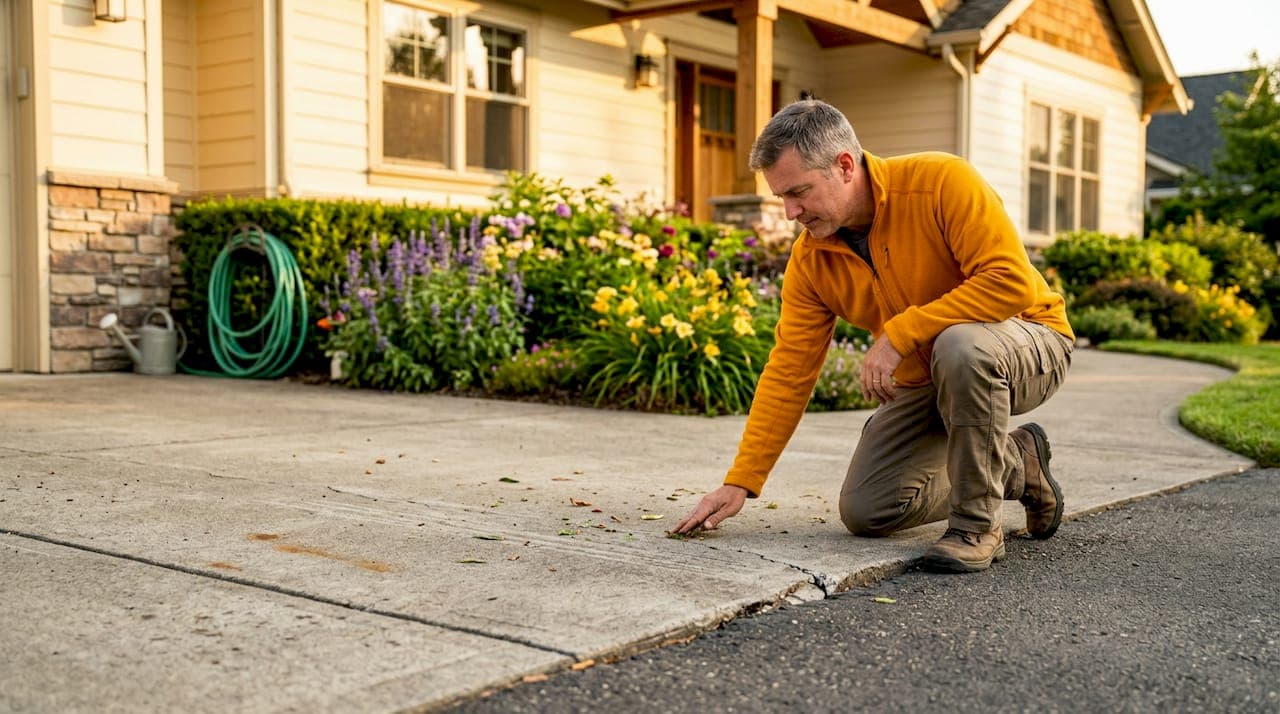
Concrete looks tough, but it has a weakness most homeowners don't think about until it's too late. The surface is porous, which means water, oil, road salt, and UV rays work their way in and quietly cause damage over time. Understanding why seal a concrete driveway matters is the difference between a surface that lasts 50 years and one that starts cracking and staining within a decade. This guide covers the real benefits of sealing, how to choose the right product, when to reseal, and how to apply it correctly so your driveway stays in top shape for years.
Table of Contents
- Key takeaways
- Why seal a concrete driveway
- Choosing the right sealer type
- How often to reseal your driveway
- How to seal a concrete driveway step by step
- My take on sealing as a long-term investment
- Protect your driveway with Thetopchoiceconcrete
- FAQ
Key takeaways
| Point | Details |
|---|---|
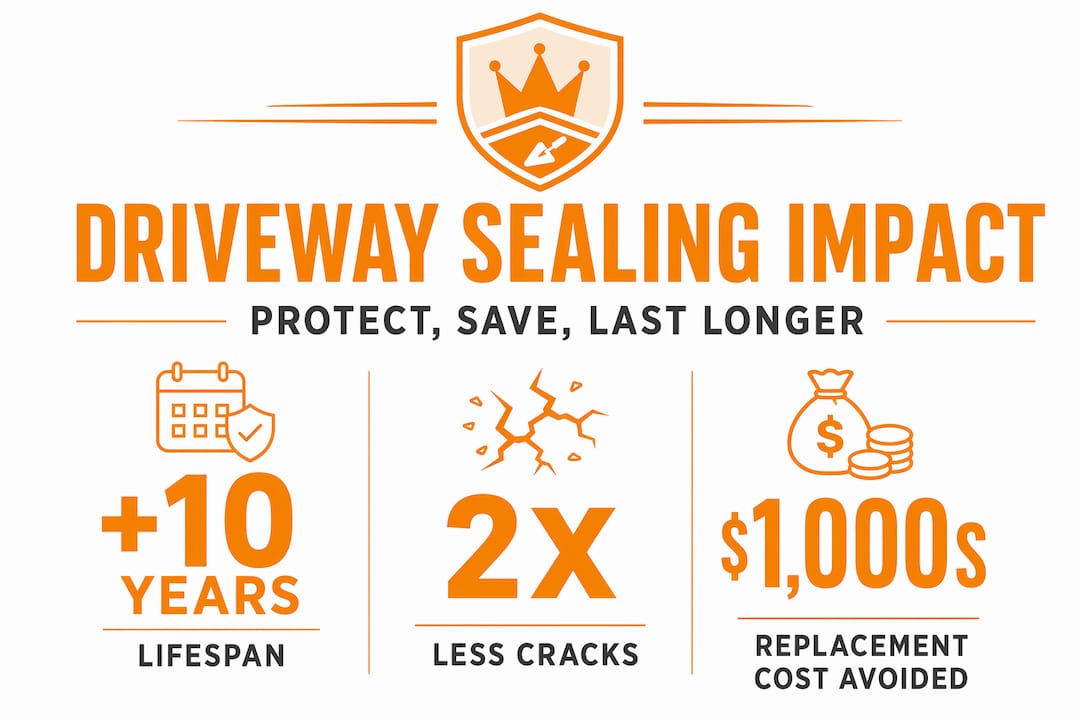
| Sealing extends driveway life | Proper sealing can help concrete driveways last 30 to 50 years with regular maintenance. |
| Choose the right sealer type | Penetrating sealers protect without trapping moisture; topical sealers add gloss but require careful selection. |
| Reseal every 2 to 3 years | Most driveways need resealing on a 2 to 3 year schedule depending on weather and use. |
| Prep work is non-negotiable | Cleaning and crack repair before sealing determines how well the product bonds and performs. |
| Sealing saves money long term | The cost of sealing is far lower than the cost of replacing a damaged driveway. |
Why seal a concrete driveway
Concrete is not the impenetrable surface it appears to be. At a microscopic level, it is full of tiny pores and capillaries that absorb water, chemicals, and debris every single day. Without a protective layer, that absorption leads to real problems.
The most damaging process is the freeze-thaw cycle. Water soaks into the concrete, freezes, expands, and fractures the material from the inside out. In climates with cold winters, this happens repeatedly throughout the season. Sealing reduces freeze-thaw damage by limiting how much moisture gets into the pores in the first place.
Beyond cold weather, there are several other benefits of sealed concrete driveways worth knowing:
- Stain resistance. Oil drips, rust, and chemical spills absorb into unsealed concrete almost instantly. A sealer acts as a barrier, giving you time to clean spills before they become permanent. Sealed surfaces resist oil and chemical stains, which makes routine cleaning much easier.
- UV protection. Sunlight bleaches and weakens concrete over time. Sealers slow that fading process and help maintain the original color and texture of the surface.
- Curb appeal. A freshly sealed driveway looks noticeably cleaner and more finished. Some sealers add a subtle sheen that makes the surface look almost new.
- Extended lifespan. With consistent maintenance, concrete driveways can last 30 to 50 years. Sealing is one of the primary maintenance tasks that gets you to the high end of that range.
One thing worth knowing: sealing slows moisture ingress rather than stopping cracks outright. It is a protective measure, not a repair solution. If cracks already exist, you need to address those before applying any sealer.
Pro Tip: If your driveway is new, wait at least 28 days before sealing. Fresh concrete needs time to fully cure, and sealing too early can trap gases and weaken the bond.
Choosing the right sealer type
Not all concrete sealers work the same way, and picking the wrong one can actually cause more harm than good. There are two main categories: penetrating sealers and topical sealers.
Penetrating sealers, particularly silane and siloxane formulas, soak below the surface and chemically bond within the concrete substrate. They do not form a film on top, which means they allow moisture vapor to escape while still blocking liquid water from entering. Silane products penetrate completely without altering the surface appearance, making them ideal for driveways exposed to freeze-thaw cycles and road salt.
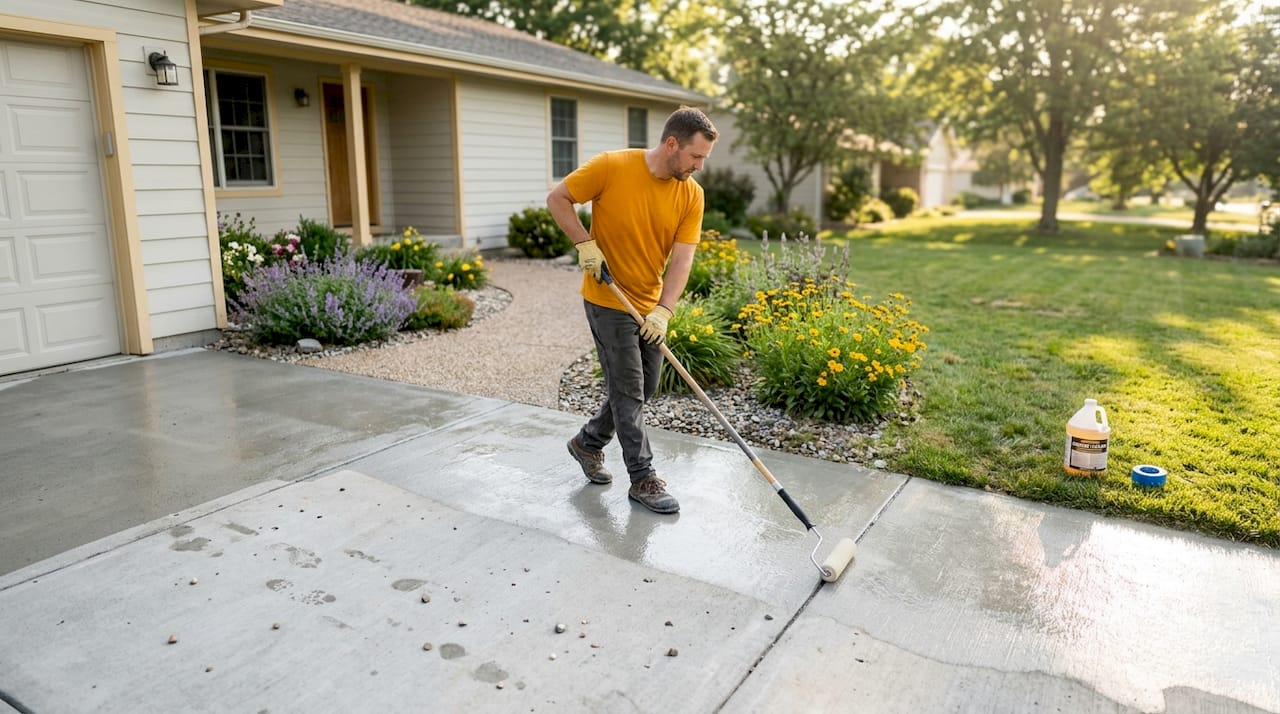
Topical sealers sit on top of the surface and form a protective film. They are available in matte, satin, and high-gloss finishes, which makes them popular for decorative concrete. The tradeoff is that they can trap moisture if applied to concrete that is not fully dry, and they tend to wear faster in high-traffic areas.
Here is a side-by-side comparison to help you decide:
| Feature | Penetrating sealer | Topical sealer |
|---|---|---|
| Application method | Absorbs into concrete | Forms surface film |
| Vapor permeability | Yes, allows concrete to breathe | Limited, can trap moisture |
| Appearance change | Minimal to none | Adds sheen or gloss |
| Best for | Freeze-thaw climates, salt exposure | Decorative finishes, patios |
| Typical longevity | 5 to 10 years | 1 to 3 years |
| Reapplication ease | Simple, no stripping needed | May require stripping old sealer |
For most residential driveways in Central Alabama and similar climates, a penetrating silane or siloxane sealer is the smarter choice. The weather swings between hot, humid summers and occasional freezing winters, both of which stress unsealed concrete.
Pro Tip: If you want to seal concrete patio properly and your patio has decorative stamping or color, a topical sealer in a low-gloss finish can enhance the look without making the surface dangerously slick when wet.
How often to reseal your driveway
Sealing is not a one-and-done task. No permanent seal exists because concrete is porous and sealers break down over time from UV exposure, traffic, and weather. The good news is that resealing is straightforward once you know the schedule.
Here is how to build a practical maintenance plan:
- Start with a baseline interval. For most driveways, resealing every 2 to 3 years is a reliable starting point. High-quality penetrating sealers can stretch that window to five years or more.
- Adjust for your conditions. A driveway in a shaded area with light use will hold its seal longer than one baking in direct sun with daily heavy vehicle traffic. Be honest about your driveway's exposure.
- Watch for warning signs. Fading color, water soaking in instead of beading up, new staining, and surface pitting are all signals that the sealer has worn out and reapplication is overdue.
- Clean before you reseal. Applying fresh sealer over a dirty surface traps contaminants underneath and reduces adhesion. A pressure wash and degreaser treatment are the minimum prep steps.
- Consider professional resealing for large or complex surfaces. DIY resealing works well for straightforward driveways, but if your surface has heavy staining, previous sealer buildup, or significant cracking, a professional can assess and prep the surface more thoroughly.
Pro Tip: Do the water bead test once a year. Pour a cup of water on the driveway. If it beads up and rolls off, the sealer is still working. If it soaks in within a few seconds, it is time to reseal.
How to seal a concrete driveway step by step
Knowing the process matters whether you plan to do it yourself or simply want to understand what a contractor should be doing. Here is what proper application looks like:
- Clean the surface thoroughly. Sweep away loose debris, then pressure wash the entire driveway. Use a concrete degreaser on any oil stains. Let the surface dry completely, which typically takes 24 to 48 hours depending on humidity.
- Repair cracks and damage. Fill any cracks with a concrete crack filler and let it cure according to the product instructions. Sealing over open cracks does not fix them and can actually lock in moisture.
- Check the weather forecast. Sealers perform best in warm, dry conditions, ideally between 50°F and 90°F with no rain in the forecast for at least 24 hours. Avoid sealing in direct midday sun, which can cause the sealer to dry too fast and leave lap marks.
- Apply the sealer in thin, even coats. Use a pump sprayer for penetrating sealers or a roller for topical products. Work in sections and maintain a wet edge to avoid overlap marks. Two thin coats almost always outperform one thick coat.
- Allow proper drying time. Most sealers are dry to the touch within a few hours but need 24 hours before foot traffic and 72 hours before vehicle traffic. Rushing this step damages the finish.
- Follow safety precautions. Wear gloves and eye protection. Work in a ventilated area or use a respirator if applying solvent-based products. Keep children and pets off the surface until it is fully cured.
Sealing is a DIY-friendly project when preparation is done correctly. The prep work is where most homeowners cut corners, and it is exactly where the quality of the finished result is determined.
Pro Tip: One thing that catches people off guard: sealed driveways can absorb more heat in summer, especially with darker topical sealers. If you have kids who play barefoot in the driveway, factor that in when choosing your product.
My take on sealing as a long-term investment
I have worked with concrete for over two decades, and the pattern I see most often is this: homeowners spend good money on a quality driveway installation, then skip the maintenance because the surface looks fine. It does not look fine for long.
What I have found is that sealing is one of the highest-return maintenance tasks a homeowner can do. The cost of sealing is a fraction of what you will pay for crack repairs, resurfacing, or full replacement. A driveway that gets sealed consistently on schedule can genuinely reach that 30 to 50 year lifespan. One that never gets sealed starts showing serious wear within 10 to 15 years in most climates.
The misconception I hear most is that sealing is permanent. It is not, and expecting it to be leads people to skip reapplication until the damage is already done. Think of it like repainting your home's exterior. You do not wait until the wood is rotting to add a fresh coat.
The other mistake I see regularly is applying sealer to concrete that has not been properly cleaned or cured. The product cannot bond correctly, and you end up with peeling, bubbling, or uneven coverage that looks worse than no sealer at all. Doing it right the first time, and on schedule after that, is what actually protects your investment.
— David
Protect your driveway with Thetopchoiceconcrete
If your driveway is showing wear or you are not sure when it was last sealed, this is the right time to get a professional set of eyes on it.
Thetopchoiceconcrete has been delivering quality concrete work across Central Alabama for over 20 years. From driveway sealing and repairs to full installations, the team brings the kind of hands-on experience that makes a real difference in how long your surfaces last. Whether you want a professional to handle the sealing process or you need honest advice on the condition of your current driveway, Thetopchoiceconcrete is ready to help. Request an estimate and find out what it takes to keep your concrete protected and looking great for the long haul.
FAQ
Why seal a concrete driveway at all?
Sealing protects concrete from water infiltration, freeze-thaw damage, oil stains, and UV fading. It extends the usable life of the driveway and reduces the frequency and cost of repairs over time.
How often should you reseal a concrete driveway?
Most driveways benefit from resealing every 2 to 3 years, though high-quality penetrating sealers can last up to 10 years depending on weather exposure and traffic levels.
Is sealing concrete necessary or just optional?
Sealing is not legally required, but skipping it significantly shortens driveway lifespan. Given that replacement costs far exceed the cost of sealing, most concrete professionals consider it a necessary part of concrete driveway maintenance.
What is the best type of sealer for a driveway?
Penetrating silane or siloxane sealers are generally the best choice for driveways because they bond within the concrete, allow vapor to escape, and provide strong resistance to freeze-thaw cycles and road salt without changing the surface appearance.
Can you seal a new concrete driveway right away?
No. New concrete needs at least 28 days to fully cure before sealing. Applying sealer too early traps curing gases, weakens the bond, and can cause surface defects that are difficult to reverse.